
Transfer Pricing & Intercompany Finance
ArfCap builds quantitative, audit-ready frameworks for pricing intercompany financial transactions, aligning group treasury practice with the OECD arm’s-length principle through reproducible models, verifiable market data and clear documentation.
In-House Banking & Rate Matrices
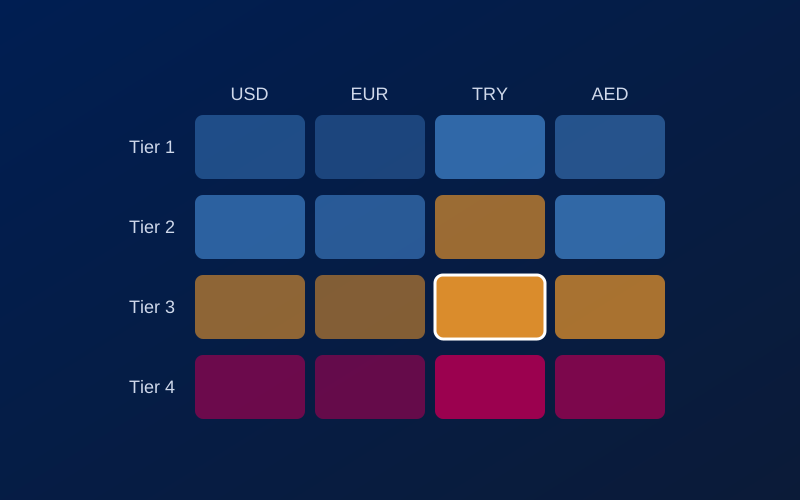
We design intercompany rate matrices for multinational groups that operate in-house banking or cash-pooling structures. Each subsidiary is assigned a credit tier from sovereign and entity-level financial indicators, and loan and deposit rates are derived from currency-specific reference rates plus calibrated risk spreads. The result is a single, consistent pricing grid that can be updated each year and applied across the group.
- Multi-currency reference rate sourcing from central bank policy rates and risk-free rates
- Country and subsidiary credit classification with documented criteria
- Tiered loan and deposit spread calibration
- Annual rate matrix vintages with full version control
Arm’s-Length Benchmarking
Our benchmarking combines the main approaches recognised under the OECD Transfer Pricing Guidelines for financial transactions: comparable uncontrolled prices, cost-of-funds build-ups and credit-rating-based analysis. Comparables are matched to the actual product, covering term, liquidity and currency, so the benchmark reflects what an independent party would realistically obtain.
- CUP analysis using product-matched bank and market rates
- Cost-of-funds models (base rate + country risk + credit risk)
- Synthetic credit rating and spread estimation
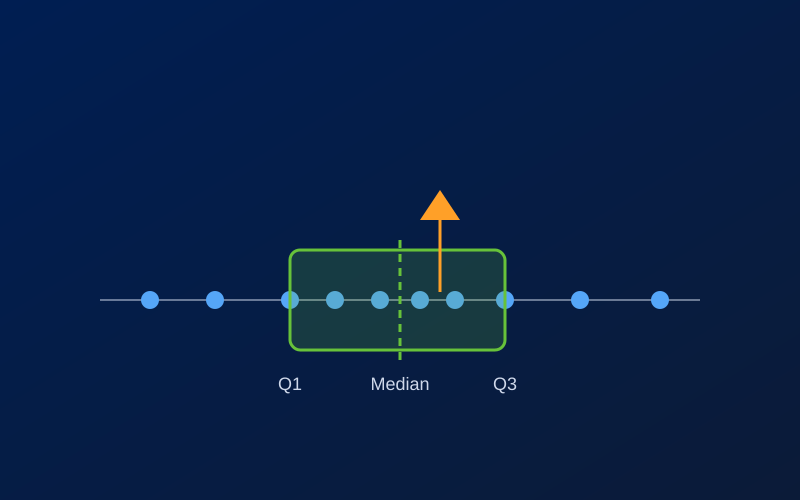
- Arm’s-length ranges with sensitivity and adjustment quantification
Audit Support & Documentation
Tax authorities and auditors increasingly test how an intercompany balance is characterised, not just the rate charged on it. We reconstruct transaction-level exposures, reconcile booked interest against model-implied rates, and assess whether a balance behaves like a deposit, a facility or a term loan. Our findings are delivered as transparent workbooks and memos that hold up under review.
- Accurate delineation of intercompany balances (deposit vs. loan)
- Daily balance reconstruction and booked-interest reconciliation
- Exposure scenarios under alternative characterisations
- Audit-ready memos, reproducible workbooks and methodology notes